
Prostate Artery Embolization (PAE) in San Antonio, TX
Advanced, Minimally Invasive Treatment for Enlarged Prostate
If you're dealing with frequent urination, a weak stream, or waking up multiple times at night, you may be experiencing symptoms of benign prostatic hyperplasia (BPH), a common condition as men age.
At The Urology Place, we offer Prostate Artery Embolization (PAE), a non-surgical, outpatient treatment designed to shrink the prostate and relieve symptoms without the risks of traditional surgery.
What Is PAE?
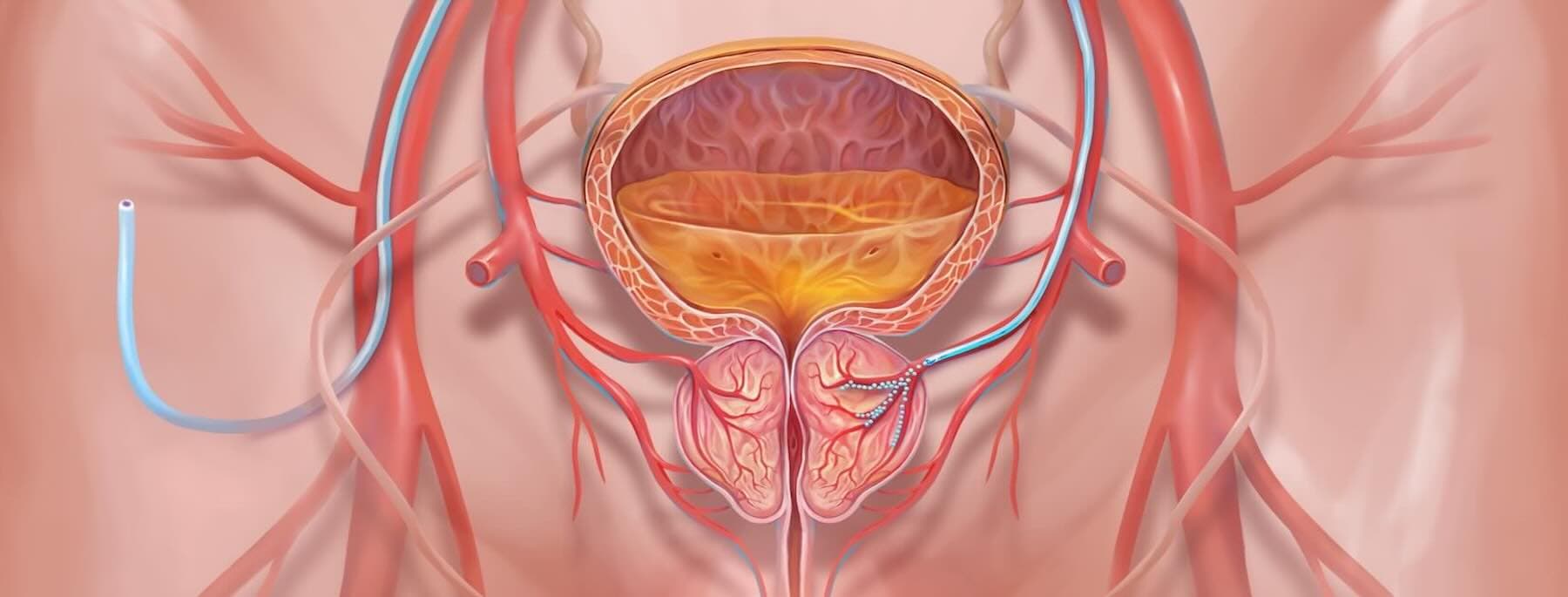
Prostate Artery Embolization (PAE) is a minimally invasive procedure used to treat symptoms of an enlarged prostate (also called benign prostatic hyperplasia, or BPH). During the procedure, a specially trained doctor threads a tiny catheter through a small puncture in the wrist or groin and uses X-ray guidance to reach the blood vessels feeding the prostate. Tiny particles are then injected to reduce blood flow to the prostate, causing it to shrink over time. This relieves urinary symptoms without traditional surgery.
PAE is typically performed as an outpatient procedure, meaning most patients go home the same day.

What Does the Research Say?
Below is a summary of four major studies that have evaluated PAE. Together, they include over 1,400 patients and provide strong evidence that PAE is safe and effective.
Does PAE Really Work, or Is It Just a Placebo Effect?
The Study: A randomized, placebo-controlled trial published in European Urology (2020) — one of the world’s top urology journals.
What They Did: 80 men with severe BPH symptoms that had not improved with medication were randomly assigned to receive either a real PAE procedure or a “sham” (fake) procedure. Neither the patients nor the evaluators knew which procedure each patient received.
Key Findings:
- Men who received PAE had dramatically better symptom improvement than those who received the sham procedure.
- Quality of life scores were also significantly better in the PAE group.
- When the sham group later received the real PAE procedure, they experienced the same level of improvement.
- Side effects were similar between both groups, and no serious complications occurred.
What This Means for You: This study proves that the benefits of PAE are real — not just a placebo effect. This is considered the gold standard type of clinical trial.
Is PAE Recommended by Medical Societies?
Yes. The American Urological Association (AUA) — the leading professional organization for urologists in the United States — includes PAE as a recommended treatment option for men with prostates 50 cc or larger in their 2026 clinical guidelines.
Quick Comparison
| Category | PAE | Medication | TURP (Surgery) |
|---|---|---|---|
| Procedure | Minimally invasive (tiny wrist/groin puncture) | Daily pills | Surgery under anesthesia |
| Recovery | Same day; return to activities in days | No recovery needed | 1–2 nights in hospital; weeks to recover |
| Effectiveness | Significant and lasting | Moderate | Greatest improvement |
| Risks / Side Effects | Very low risk | Common (erectile dysfunction, ejaculation changes) | Common (retrograde ejaculation) |
| Catheter | Usually not | N/A | Typically yes, for days |
| Retreatment | ~16% over 5 years | Ongoing daily use | ~10–15% over time |
Is PAE Right for You?
PAE may be a good option if you:
- Have moderate to severe urinary symptoms from an enlarged prostate
- Have not found adequate relief from medications
- Want to avoid traditional surgery
- Are concerned about sexual side effects
- Prefer a same-day, minimally invasive procedure
The best way to find out if PAE is right for you is to schedule a consultation. We will review your symptoms, medical history, and imaging to determine whether you are a good candidate.
How the Procedure Works
A small catheter is inserted through the wrist or groin and guided to the prostate arteries using advanced imaging.
Tiny particles are then injected to reduce blood flow, allowing the prostate to gradually shrink. The procedure typically takes 1 to 2 hours, is performed in an outpatient setting, and uses local anesthesia with light sedation.
This illustration shows the PAE procedure itself and helps visualize how targeted treatment is delivered to the prostate.
Your PAE Care Team
At The Urology Place, Dr. Naveen Kella evaluates your symptoms, confirms whether PAE is appropriate, and coordinates your overall BPH care. The embolization procedure is performed by Dr. Sandeep Rao, a board-certified interventional radiologist who works closely with Dr. Kella to deliver image-guided, minimally invasive treatment.

Dr. Sandeep Rao, MD, MBA, CWSP
Board-Certified Interventional Radiologist
With more than two decades in practice, Dr. Rao focuses on minimally invasive, image-guided treatments for vascular disease, chronic pain, and other complex conditions.
His expertise includes prostate artery embolization for enlarged prostate, along with genicular artery embolization for knee pain and plantar fascia embolization. He is known for adopting newer endovascular techniques early in their clinical use.
Dr. Rao performs hundreds of embolization procedures each year and partners with Dr. Kella so patients receive thorough urologic evaluation before and coordinated follow-up after PAE.
- Medical Degree: Texas Tech University Health Sciences Center
- Radiology Residency: Ohio State University
- Vascular & Interventional Radiology Fellowship: Johns Hopkins Hospital
- General Surgery Residency: Harvard Medical School (Beth Israel Deaconess Medical Center)
- American Board of Radiology – Diagnostic Radiology
- American Board of Radiology – Vascular & Interventional Radiology
- American Board of Wound Management – Certified Wound Specialist Physician
Dr. Rao performs a wide range of advanced procedures, including:
- Prostate Artery Embolization (PAE)
- Genicular Artery Embolization (GAE) for knee pain
- Plantar Fascia Embolization
- Hemorrhoid Embolization
- Varicocele Embolization
- Peripheral artery disease treatments
- Venous disease treatments
He completes hundreds of embolization procedures each year and regularly presents at national interventional radiology conferences.
Recovery and Results
Most patients go home the same day. You may experience mild pelvic discomfort for a few days along with temporary urinary urgency or frequency. Most individuals are able to return to normal activities within 1 to 3 days. Symptom improvement typically begins within a few weeks and continues to improve over the course of 2 to 3 months.
Scheduling Information
To schedule your consultation with Dr. Kella: Please call 210-617-3670 and ask to speak with the PAE scheduling team, or select the surgery line when prompted. If the department is unavailable, please dial extension 107, 103, or leave a voicemail.
Procedure Location
To schedule the PAE procedure with Dr. Rao: Please contact Monica at 210-660-2010.
I-Vascular Center19234 Stonehue
San Antonio, TX 78258
Contact Us For Prostatic Artery Embolization (PAE)
Tell us a bit about what you’re looking for and our team will reach out shortly.