
Brachytherapy
Interventional Radiotherapy: Low-Dose-Rate (LDR) Brachytherapy for Prostate Cancer
What is Modern LDR Brachytherapy?
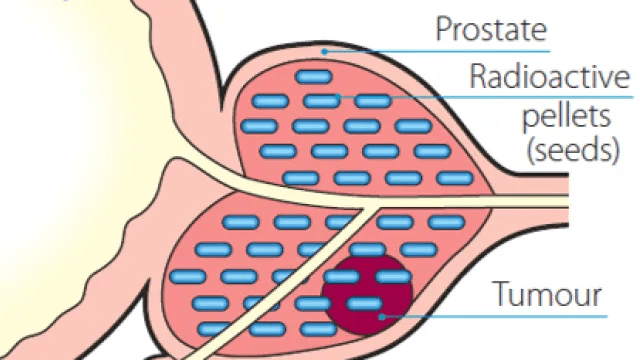
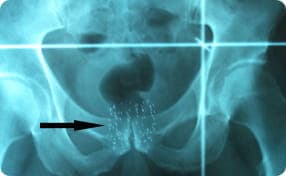
Low-Dose-Rate (LDR) brachytherapy often referred to as "seed implantation" is a highly precise form of internal radiation therapy. Unlike traditional external radiation, which must travel through healthy skin and tissue to reach the target, modern brachytherapy places tiny, radioactive seeds (each about the size of a grain of rice) directly inside the prostate gland.
Using advanced, live-ultrasound guidance and state-of-the-art computer mapping, our radiation oncology team precisely distributes these seeds to match the exact shape and size of your prostate.
Just like surgery, experience is KEY for good outcomes. Dr Kella has performed thousands of robotic prostate surgeries, putting him in the top 1% for surgical experience. He has partnered with Western Radiation Oncology after years of planning. The group has done thousands of brachytherapy cases and is the busiest active group in the world. No one in the Southwest comes close to their experience.
Over several weeks and months, the seeds continuously deliver a localized, cancer-killing dose of radiation. Eventually, the radiation safely fades away, leaving the harmless, microscopic seeds permanently in place.
Why Pursue Brachytherapy?
When confronting prostate cancer, choosing a treatment is a balance between long-term cure rates and quality of life. Brachytherapy is widely pursued for several compelling reasons:
- Maximum Impact, Minimum Side Effects: Because the radiation source is inside the tumor, it delivers an incredibly high dose to the cancer cells while dramatically sparing the surrounding healthy organs (like the bladder and rectum). Most patients do NOT need a urinary catheter afterwards. Many patients will be offered a temporary rectal spacer, 1-3 weeks prior to the procedure. This moves the rectum away from the prostate, reducing any future rectal damage from the radiation to about 1% risk. In addition, there is less erectile dysfunction risk with the spacer. This procedure is quick and done in the office.
- Superb Preservation of Quality of Life: Compared to radical surgical removal of the prostate, modern brachytherapy carries a significantly lower risk of urinary incontinence and offers a more favorable profile for preserving long-term sexual function.
- Unmatched Convenience: While standard external beam radiation requires daily trips to a facility for up to several weeks, LDR brachytherapy is a one-time, outpatient procedure. You walk in and walk out the same day.
Proven Outcomes Across Risk Groups
Prostate cancer is typically categorized into risk groups based on your PSA level, Gleason score, and clinical stage. LDR brachytherapy has an exceptional track record, heavily supported by decades of clinical data:
- Low-Risk Prostate Cancer: For localized, early-stage cancer, brachytherapy is highly effective as a standalone "monotherapy." Long-term data shows disease-free cure rates as high as 95% at 15 years, rivaling radical prostatectomy.
- Intermediate-Risk Prostate Cancer: For men with intermediate features, brachytherapy remains a premiere option. It can be used alone or combined with a short course of external beam radiation/hormone therapy, consistently achieving excellent 10-year biochemical control rates (often between 85% to 94%).
- High-Risk Prostate Cancer: For advanced or aggressive cases, modern brachytherapy is used as a powerful "boost" alongside external beam radiation therapy (EBRT). Large-scale clinical trials (such as the landmark ASCENDE-RT trial) have proven that adding a brachytherapy boost provides significantly higher cure rates and superior recurrence-free survival compared to external radiation alone.
The Patient Experience: What to Expect
At The Urology Place, we ensure your journey is smooth, clear, and focused on your comfort.
- The Pre-Planning Phase: A few weeks prior to the procedure, you will have a mapping session. Imaging can build a 3D computerized template of your prostate to order your exact number of seeds. If you have a large prostate or significant urinary symptoms, Dr Kella will discuss possible options to make you an optimal candidate for brachytherapy.
- Rectal Spacing Day: 1-3 weeks prior to your procedure, you will have a rectal spacer placed. This is done in the office with Dr Kella and usually takes 15-30 minutes. This will give extra protection to your rectum and nerves.
- The Procedure Day: The implant is performed in an outpatient surgical environment. You will meet your surgeons, the radiation oncologist and Dr Kella. You will receive anesthesia so you are completely asleep and feel no pain. Using the 3D map as a blueprint, seeds are placed through thin needles guided by live ultrasound. The procedure usually takes about an hour.
- Immediate Recovery: After a brief stay in the recovery room, you return home the same day. Most men report only mild soreness or a "heavy" sensation in the pelvic area, which is easily managed with mild over-the-counter pain relievers.
- The Weeks Following: As the seeds actively emit radiation over the first few weeks, you may experience temporary urinary symptoms like a stronger urgency to go, a slower stream, or mild burning. These side effects peak around 4 to 6 weeks and steadily resolve as the seeds lose their energy. Most men return to regular, everyday activities within just a few days of the procedure.
Your Brachytherapy Care Team
At The Urology Place, Dr. Naveen Kella evaluates your candidacy, coordinates pre-procedure planning (including rectal spacer placement when appropriate), and works alongside your radiation oncology team on procedure day. The seed implant is performed in partnership with Western Radiation Oncology, led by Dr. Ankit Agarwal, one of the most experienced prostate brachytherapy specialists in the field.

Dr. Ankit Agarwal, MD, MBA
Director of Radiation Therapy, Western Radiation Oncology
Dr. Ankit Agarwal is a distinguished radiation oncologist with a particular interest in innovative cancer treatments, especially for prostate cancer. With a passion for innovative, patient-centered care, he has treated over 1,000 men using intraoperatively planned prostate brachytherapy and currently performs over 300 prostate brachytherapy cases annually.
Dr. Agarwal is also experienced with a range of cutting-edge technologies, including CyberKnife SBRT for prostate cancer and Adaptive Radiation Therapy. In addition to prostate cancer, Dr. Agarwal is skilled in treating oligometastatic cancers with Stereotactic Body Radiation Therapy (SBRT) and has expertise in advanced techniques for breast, lung, head and neck, gastrointestinal, gynecological, and non-melanoma skin cancers. He is also proficient in using radiopharmaceuticals like Pluvicto and Xofigo for prostate cancer and advanced rectal spacing methods, including SpaceOAR, Barrigel, and Bioprotect.
A prolific researcher, Dr. Agarwal has authored over 40 peer-reviewed publications in leading oncology journals such as JAMA Oncology and the International Journal of Radiation Oncology, Biology, Physics. His dedication to advancing cancer treatment extends to leadership roles in the American Medical Association and the American Society for Radiation Oncology, where he has presented numerous policy and research talks at national conferences.
Dr. Agarwal graduated with honors from Boston University and Boston University School of Medicine and completed his residency in radiation oncology at the University of North Carolina in Chapel Hill. Outside of his professional life, Dr. Agarwal enjoys spending time with his wife, traveling, cooking, and hiking in the beautiful San Francisco Bay Area.
Take the Next Step
Are you a candidate for LDR Brachytherapy? Schedule a consultation with our specialized team at The Urology Place to explore your options and build a treatment plan tailored to your life.
Contact Us For Brachytherapy
Tell us a bit about what you’re looking for and our team will reach out shortly.